Blog
Sweet Alyssum from Seed: The Fastest Carpet of Honey-Scented Bloom

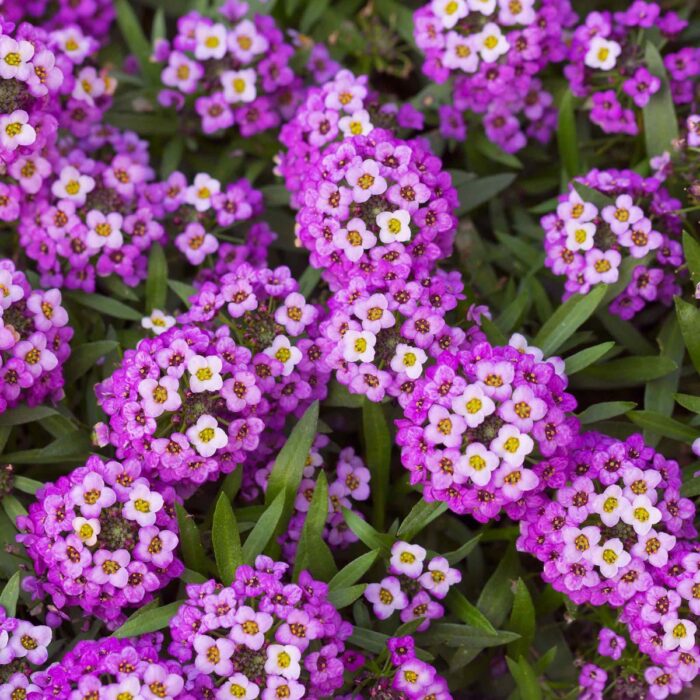
Sweet alyssum is one of the fastest and most forgiving flowers you can grow from seed: sow it on the soil surface, keep it moist, and you will have honey-scented mounds of bloom in about six to eight weeks. It tolerates light frost, dresses up bare edges and container rims, and feeds small pollinators all season. If you want a near-guaranteed win — especially in a child’s garden or your first season — start here.
Sweet Alyssum at a Glance
| BOTANICAL NAME | Lobularia maritima |
|---|---|
| LIFE CYCLE | Hardy annual (short-lived perennial in frost-free climates) |
| LIGHT | Full sun to part shade |
| HEIGHT | About 8–10 cm (3–4 in) for dwarf types |
| SPACING | 15 cm (6 in) |
| SOWING METHOD | Surface sow; direct or in trays |
| SOWING SEASON | Early spring; fall in mild-winter climates |
Why Gardeners Keep Replanting Alyssum
Alyssum does three jobs at once. It is an edging plant that softens paths and bed fronts with a low, carpet-like habit. It is a pollinator plant whose small, open flowers suit hoverflies, small native bees and honeybees — the kind of insects that also prey on aphids, which is why market growers tuck alyssum between crops. And it is fragrant: on warm still evenings a drift of alyssum carries a distinct honey scent a meter or more beyond the plants.
It asks for almost nothing in return. Average soil, reasonable drainage, and one honest haircut mid-season will keep it going for months.
When to Sow, by Climate
- US zones 7–10: fall or late-winter sowing works well; seedlings shrug off light frost and bloom earliest. In zones 3–6, start indoors 4–6 weeks before the last frost or direct-sow around it.
- UK and maritime Europe: sow under cover in early autumn for overwintered, early-flowering plants, or direct-sow from late April onward once the soil has warmed — alyssum is frost-tolerant but germinates better in soil above roughly 10 °C (50 °F).
- Hot-summer regions (southern US, Mediterranean lowlands): fall is the main season. Spring-sown plants often fizzle in serious heat, though a spot with afternoon shade extends the show.
- Continental/cold-winter Europe: treat it as a spring annual; sow indoors in March or direct-sow in April–May.
How to Sow Sweet Alyssum from Seed: Step by Step
The single most important detail: alyssum seed needs light to germinate well. It is tiny, and burying it slows or stops germination.
- Prepare a fine surface. Rake the top centimeter of soil to a crumbly texture and water it beforehand so you don’t wash seed away later.
- Scatter and press. Sow thinly — the seeds are dust-like, and crowding causes damp-off later. Press the surface gently with your palm or a board so seed meets soil, but do not cover it.
- Keep the surface constantly moist. Water with a fine spray once or twice a day until seedlings appear, usually in 5–14 days depending on temperature. A shard or fleece over the area slows drying but remove it at the first sign of green.
- Thin ruthlessly to about 15 cm. Dust-like seed always comes up too thick. Crowded alyssum stays leggy and mildews; spaced plants knit into a solid carpet within weeks anyway.
- Water weekly until established, then only in dry spells. Alyssum in the ground rarely needs extra feeding; potted plants want a diluted feed monthly.
- Optional: pinch or shear once, when plants are 5–8 cm tall, to branch them into denser mounds.

One Haircut, Months More Bloom
Alyssum’s one honest maintenance job: when the first flush fades and plants look straggly (typically mid-summer), shear them back by about half with scissors. They re-bloom hard within two to three weeks. Skip this and you get woody stems with sparse flowers. If you let some plants run to seed instead, alyssum self-sows politely — volunteer seedlings are easy to recognize, move, or weed out, and in mild-winter gardens they effectively become a free permanent edge.
Royal Carpet or Tall White?
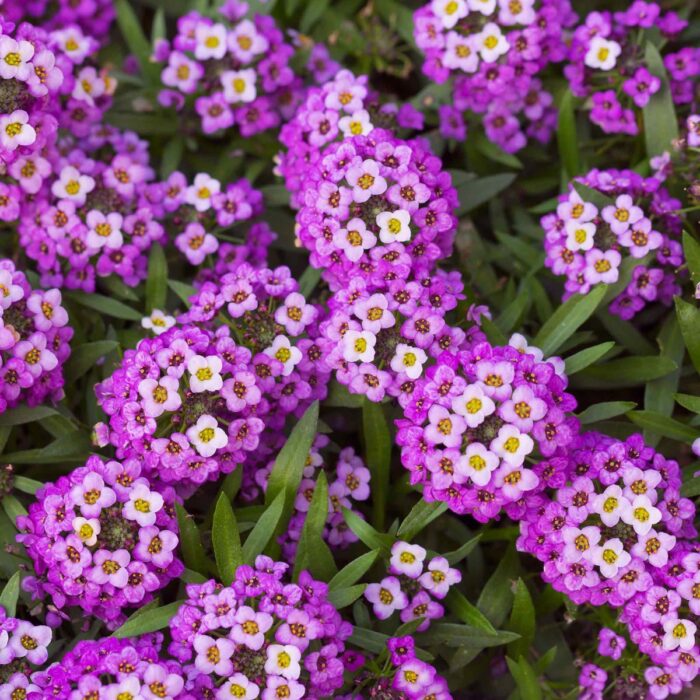
The classic dwarf variety is Sweet Alyssum Seeds (Dwarf) – Royal Carpet: deep purple-magenta flowers in dense 8–10 cm mounds that earn the “carpet” name, and the strongest color contrast you can get at an edging height. For a moon-garden or white border, Sweet Alyssum Seeds – Tall White grows a little taller with pure-white, evening-fragrant flowers that glow at dusk.
Both cost the same and are sown exactly the same way — a packet each gives you a purple-and-white checkerboard edge that blooms within two months of sowing. Alyssum also pairs naturally with other low, easy annuals: see our guide to 8 easy flower seeds to start this season, or grow it as the fragrant front edge of a cut-flower bed of annual seeds.
Quick Troubleshooting
- Seed never came up: seed was buried too deep, or the surface dried out during germination week. Resow on top and mist daily.
- Seedlings collapsed at soil line: damping off from overcrowding and stagnant air; thin immediately and reduce overhead watering.
- Plants stopped flowering in summer heat: shear hard, water deeply once, and move potted plants to afternoon shade; they usually regrow and rebloom.
FAQ
Does sweet alyssum come back every year?
It is a hardy annual — it dies with hard frost (or with heat, in hot climates). In mild-winter areas it self-sows reliably, so you usually get a new generation without buying seed again.
Can alyssum grow in shade?
Yes, with limits: part shade (especially afternoon shade in hot climates) keeps it blooming longer, but full, dense shade gives loose plants and few flowers.
How fast does alyssum grow from seed?
Germination in 5–14 days, first flowers about 6–8 weeks after sowing — one of the quickest flower seeds you can grow.
Is alyssum good for pollinators?
Excellent for small ones: the shallow, open flowers suit hoverflies, small native bees and honeybees, and its long flowering season makes it a reliable nectar line along bed edges.