



Sunflower Seeds – Ruby
$3.99
About the Variety
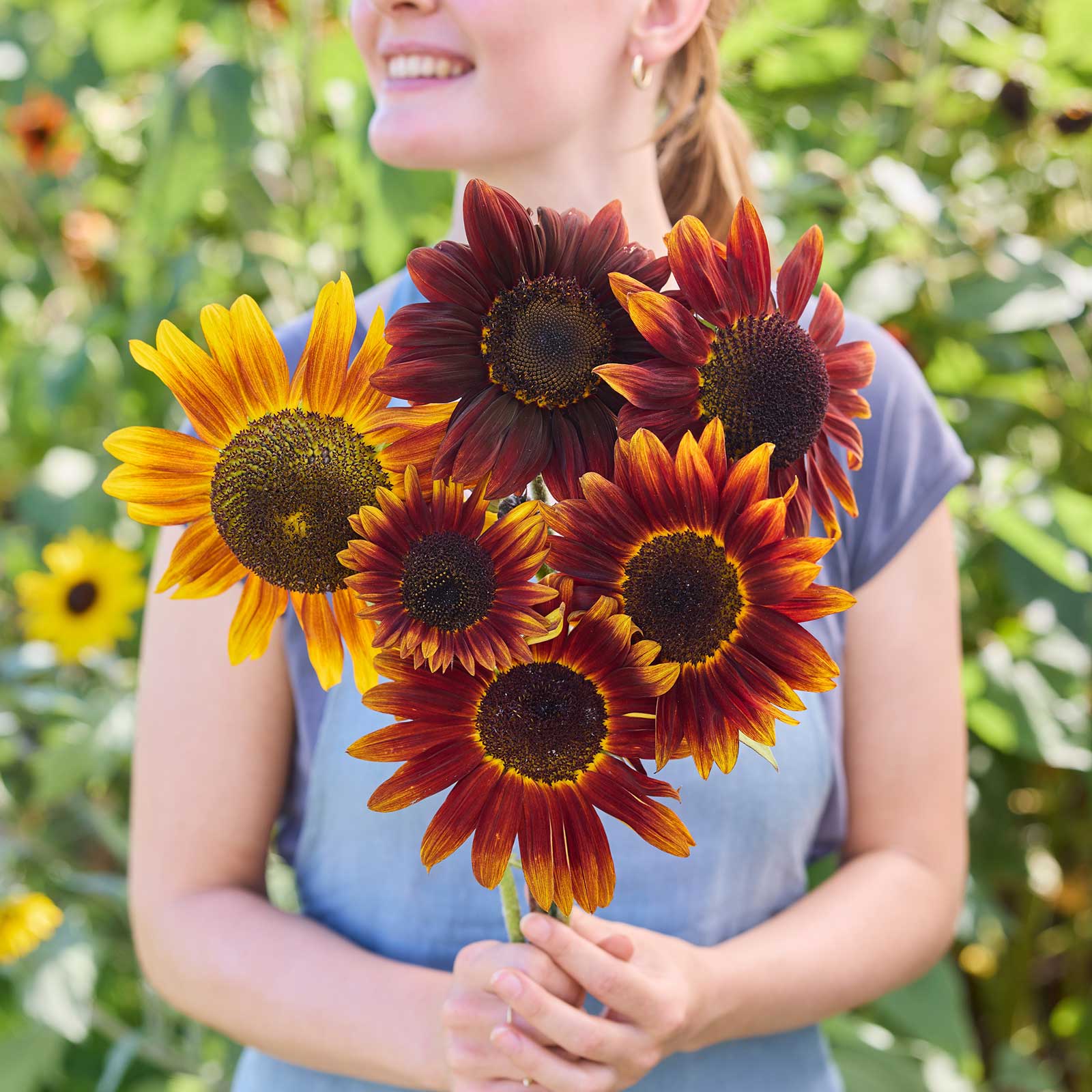
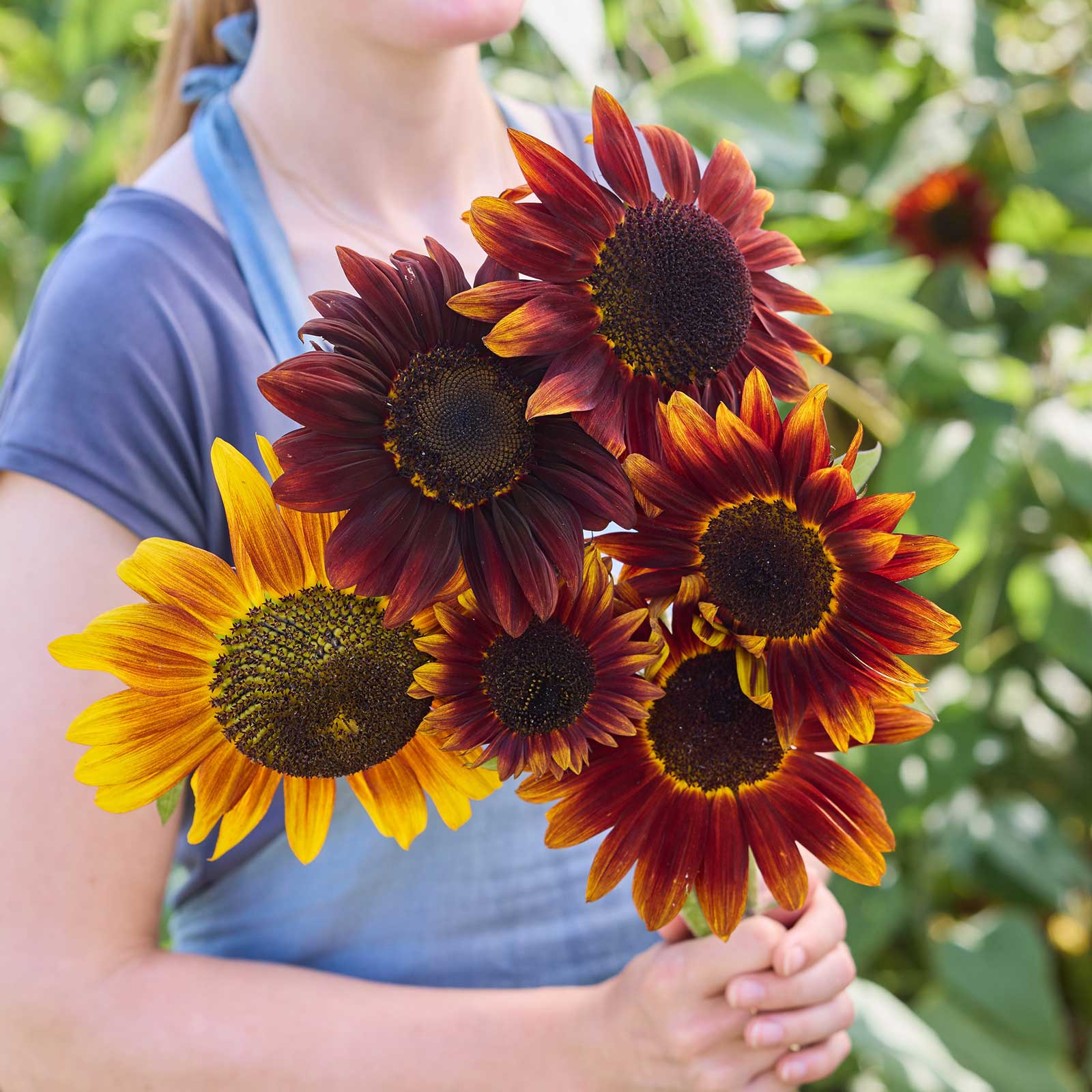
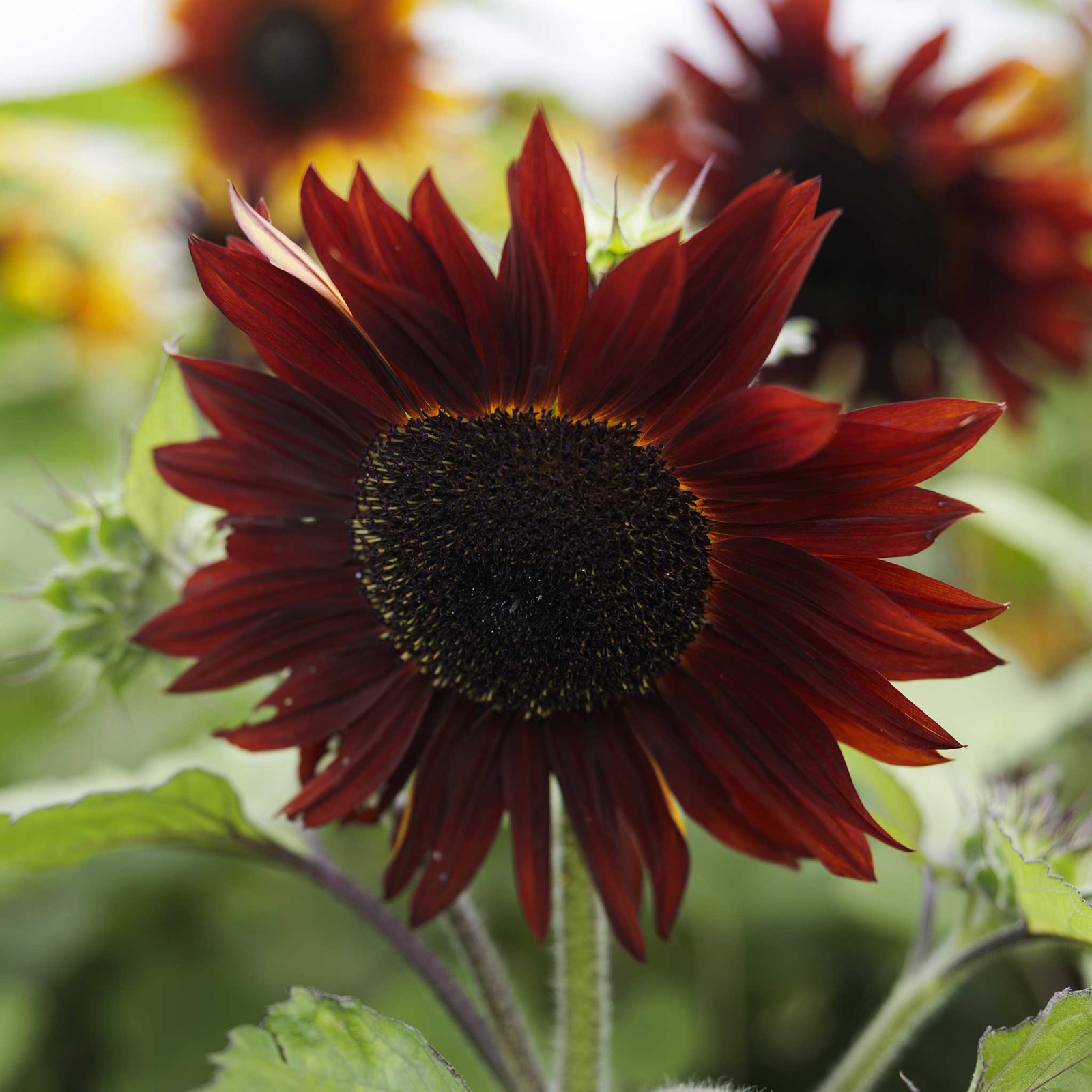
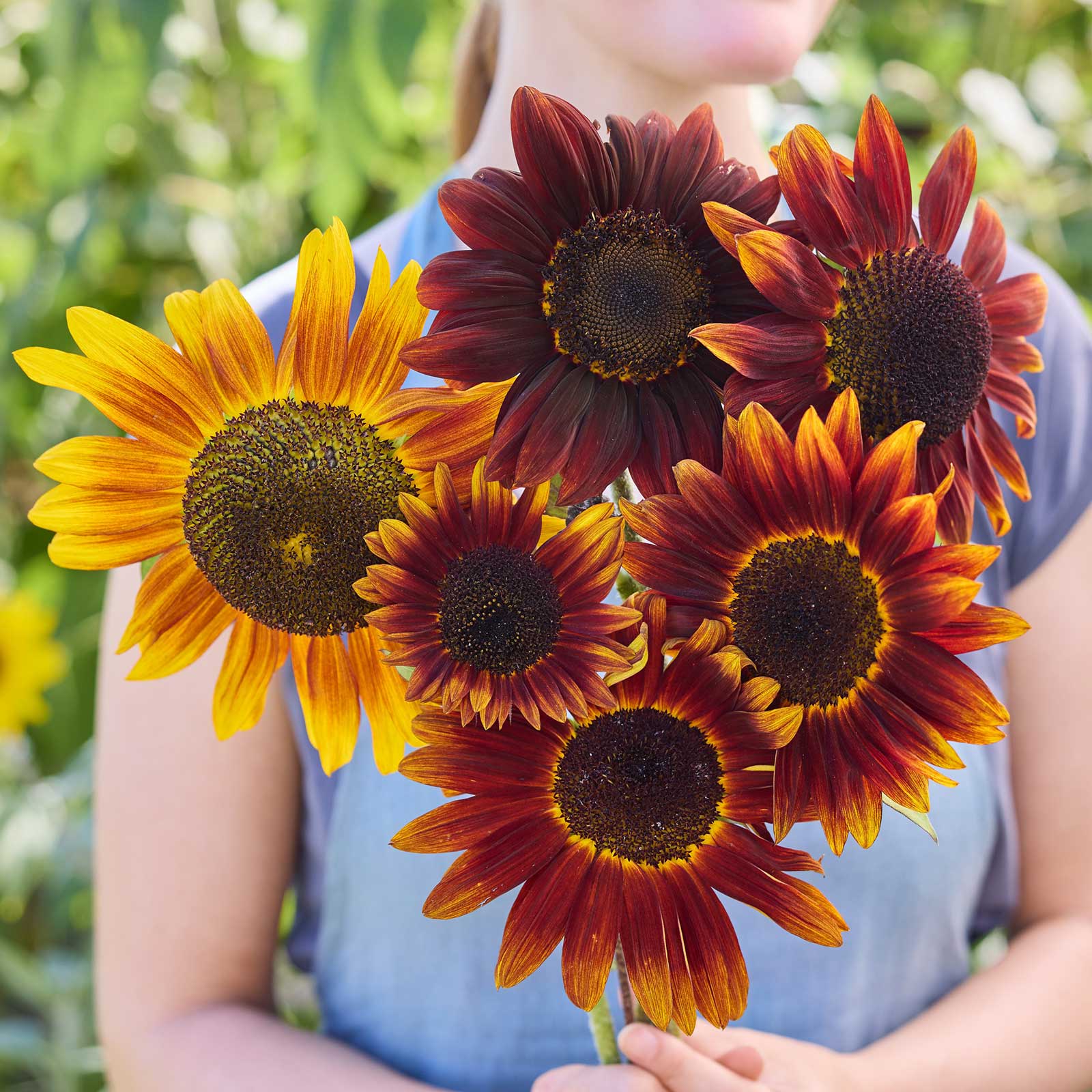
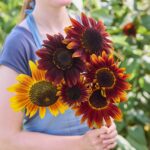
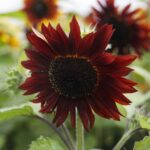
A true standout in the summer garden, Sunflower Ruby glows with richly layered blooms in shades of ruby red, mahogany, mauve, and bright yellow. Each three- to five-inch flower is accented by a luminous golden rim circling the central disk that highlights the deep, jewel-toned petals. Growing tall and upright to around six feet, this variety brings dramatic color and structure summer through fall.
Key Features
Heat Tolerant, Drought Tolerant, Attracts Bees, Attracts Butterflies, Fast Growing, Easy to Grow, Perfect for Cut Flowers, Perfect for Borders, Perfect for Dried Flowers, Perfect for Xeriscaping, Edible, Reduces Erosion, Microgreens, North American Native Cultivar
Plant Details
| BOTANICAL NAME | | Helianthus annuus |
|---|---|
| LIFE CYCLE | | Annual |
| SEED TYPE | | Hybrid Seed |
| LIGHT REQUIREMENT | | Full Sun |
| BLOOM SEASON | | Summer through Fall |
| GROWTH HABIT | | Upright |
| PLANT HEIGHT | | 68 to 78 inches |
| PLANT TYPE | | Multi-Flowered |
| COLOR | | Red |
Planting Information
| PLANTING SEASON | | Spring |
|---|---|
| SOWING METHOD | | Direct Sow |
| PLANTING DEPTH | | 1/2 inch |
| WATER NEEDS | | Average |
| PLANT SPACING | | 6 to 9 inches |
| HARDINESS ZONES | | N/A – Annual |
Planting Guide
When to Plant
We recommend sowing your sunflower seeds directly into your garden rather than start them in starter pots. Sunflowers send down long taproots that can be stunted in small pots. Once all danger of frost has passed and both daytime and nighttime temperatures reach 55F to 60F you are ready to sow your sunflower seeds.
Where to Plant
Sunflowers grow best in full-sun locations, receiving at least six to eight hours of full sun exposure per day. Though sunflowers are not finicky, they do appreciate loose, well-draining soil. Choose a location that is sheltered from strong winds, perhaps along a fence or near a building. Also consider the height that the particular variety will reach.
How to Plant
Perennial sunflower seeds like Maximillian Sunflower, require a special 28-day treatment called cold stratification prior to planting them. Learn how to cold stratify your seed here. Once you have chosen your location, dig down to a depth of two inches and turn the soil over to loosen it. Many seeds, like poppies, need sun to germinate. This is not the case with sunflowers. Instead, they need to be pressed one inch deep into the soil. If left on the soil surface, birds will likely eat them before they ever get anywhere close to germination. During planting, final spacing should be 36” apart for giant sunflowers, 24’ apart for regular-sized, and 12” apart for miniature varieties.
How to Care for
Sunflowers are usually problem-free. Plant early enough so that autumn frosts do not cut your sunflowers’ life cycle short. Too much rainfall before and after germination can cause the seeds to rot or bring on downy mildew. Be sure to seed after the rainy season to avoid this.
How to Harvest
If you would like to harvest the seeds to replant next year, wait until the end of the bloom cycle. Sunflower blooms often last 30 to 45 days. Toward the end of this period, the green back of the flower head will begin to turn yellow and will usually droop at this time. You will also see the seeds swelling on the face of the sunflower. Cover the flowers with paper bags to protect it from birds. Cut off the flower heads, and leave them inside the brown paper bag. Store this bag in a well-ventilated place like a garage until fully dry. Rub along the seeds with the palm of your hand and the seeds should fall right out into your bag. You can also work over a cookie sheet, if it seems easier. Store seeds in a cool, dry environment until you are ready to reseed next year. To eat: Soak overnight in water, or salt water. Drain, spread on a shallow baking sheet, and roast for three hours at 200F or until crisp. How to Plant & Grow Sunflower Seeds – Video Tutorial
Companion Plants
Aesthetic or CulinaryElevate your garden's allure or harvest. These are our recommendations for companion plants that will enhance either visual appeal or culinary delights.Cornflower / Bachelor Button SeedsLupine SeedsCoreopsis SeedsPest DeterringProtect your garden's health and yeild with strategic plant pairings for pest deterrence. Below are our recommendations for companion plants that will naturally repel pests and foster a thriving garden ecosystem.Onion SeedSquash Seeds
Only logged in customers who have purchased this product may leave a review.
MAECENAS IACULIS
Vestibulum curae torquent diam diam commodo parturient penatibus nunc dui adipiscing convallis bulum parturient suspendisse parturient a.Parturient in parturient scelerisque nibh lectus quam a natoque adipiscing a vestibulum hendrerit et pharetra fames nunc natoque dui.
ADIPISCING CONVALLIS BULUM
- Vestibulum penatibus nunc dui adipiscing convallis bulum parturient suspendisse.
- Abitur parturient praesent lectus quam a natoque adipiscing a vestibulum hendre.
- Diam parturient dictumst parturient scelerisque nibh lectus.
Scelerisque adipiscing bibendum sem vestibulum et in a a a purus lectus faucibus lobortis tincidunt purus lectus nisl class eros.Condimentum a et ullamcorper dictumst mus et tristique elementum nam inceptos hac parturient scelerisque vestibulum amet elit ut volutpat.


Reviews
There are no reviews yet.