




Shirley Poppy Seeds – Falling in Love
$3.99
About the Variety
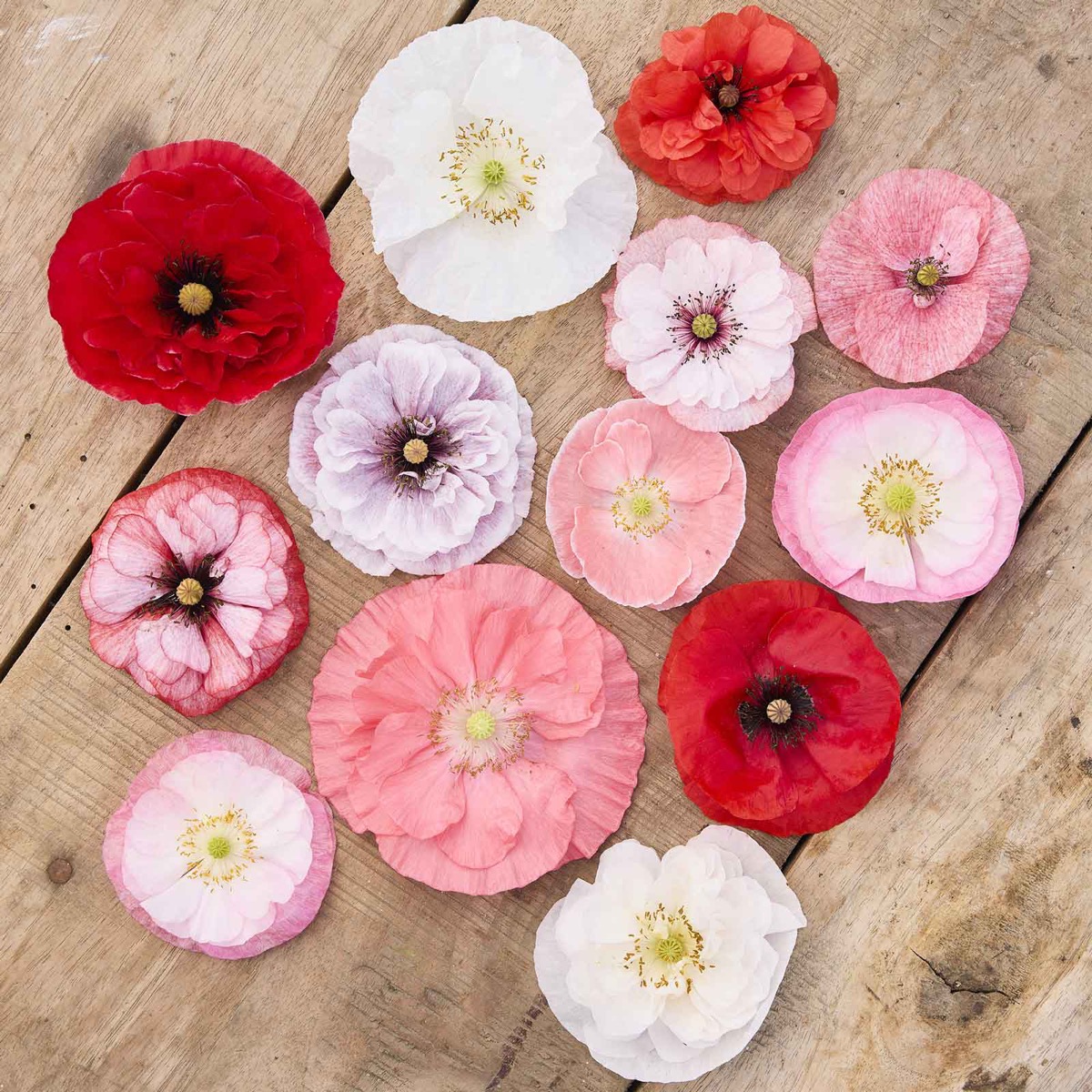
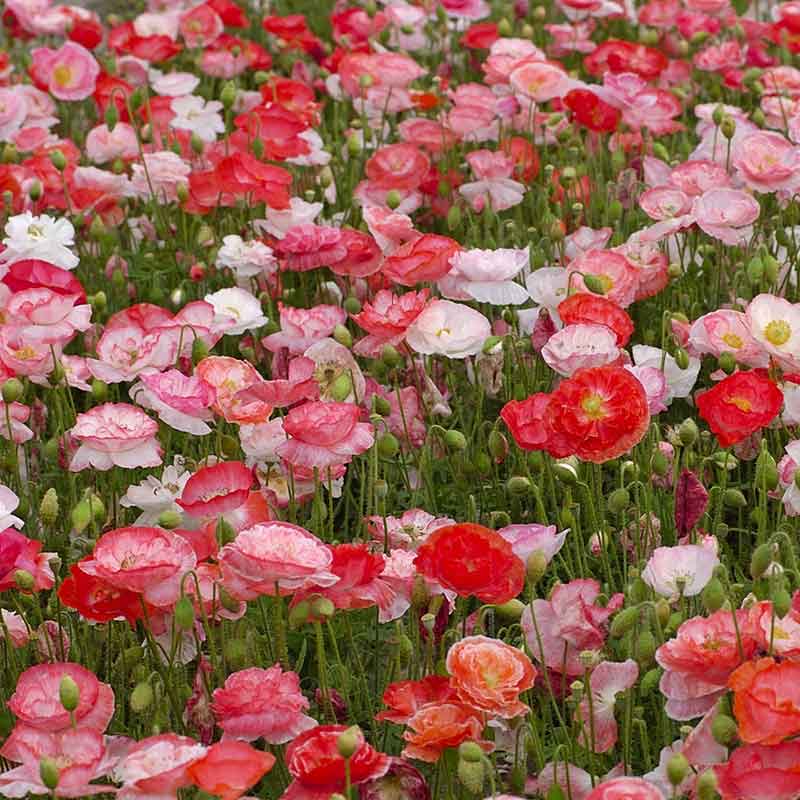
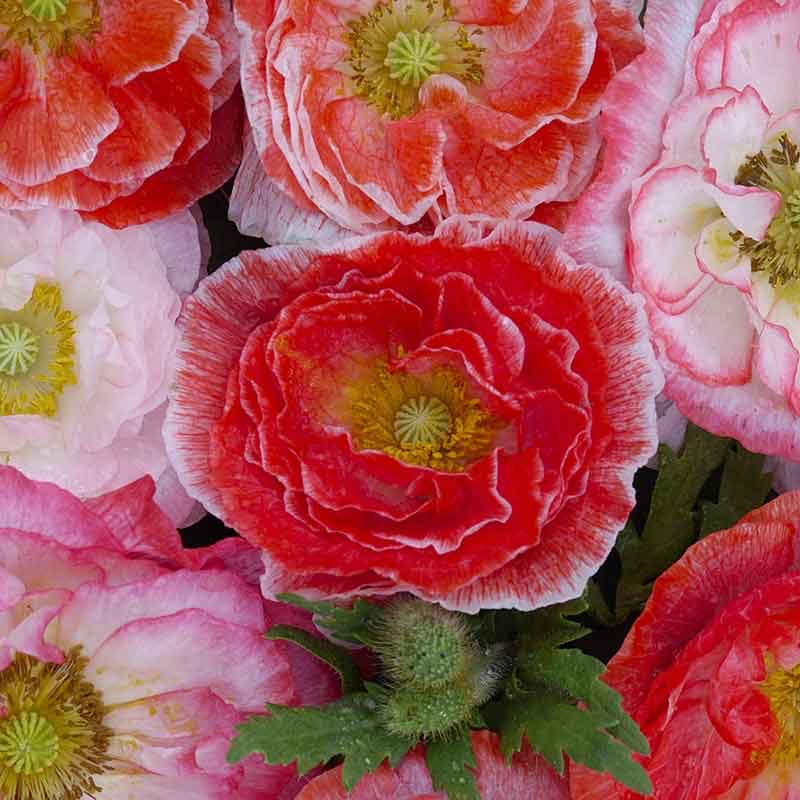
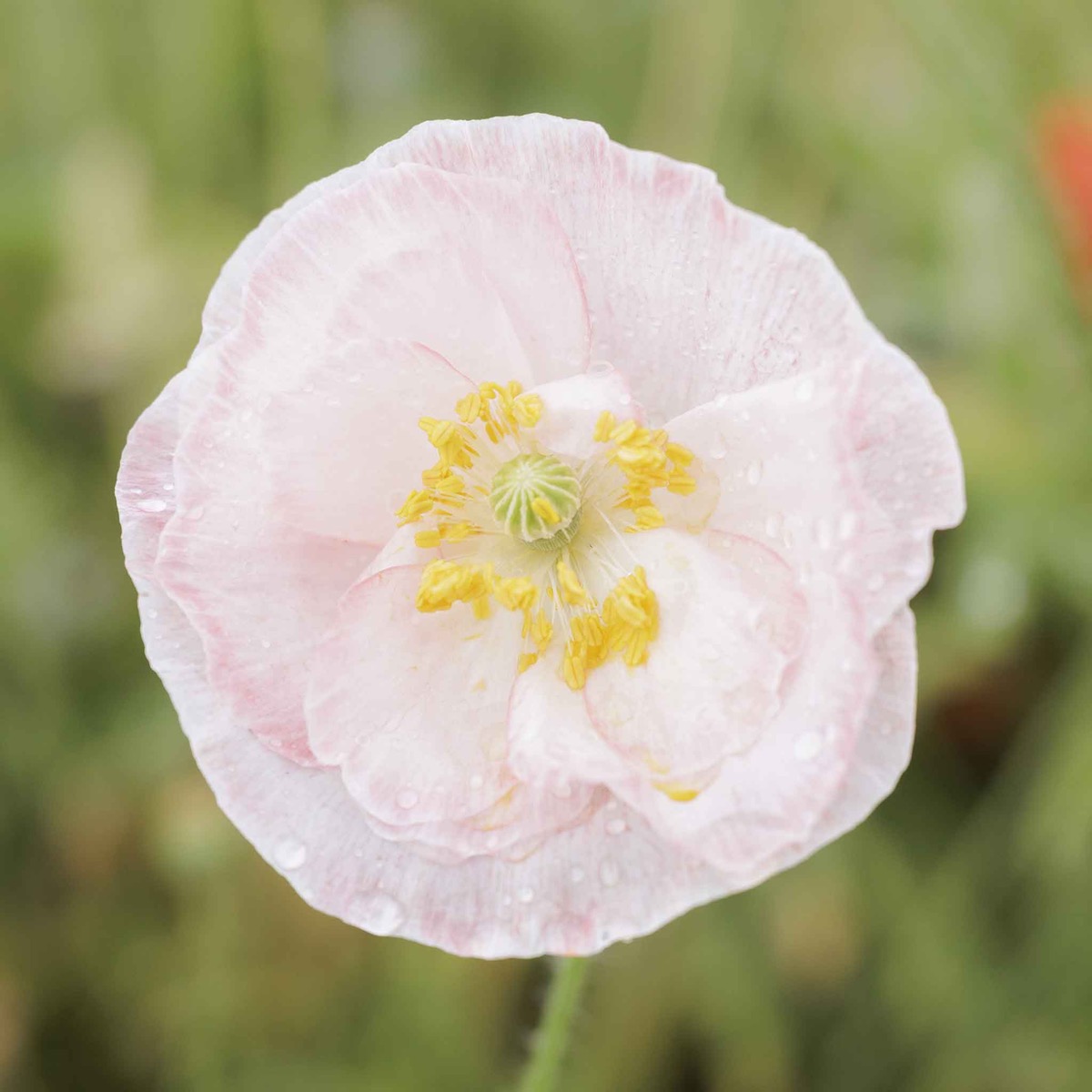
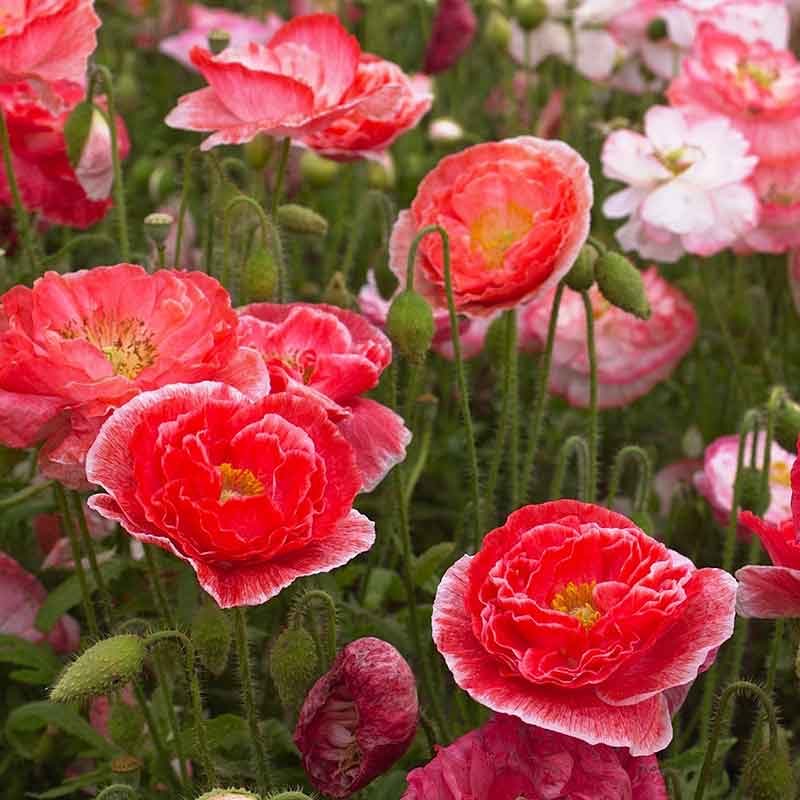
A truly special blend of poppies, Shirley Poppy Falling in Love looks as if watercolors were painted on silk. Shades of rosy pink bloom together with tangerine and coral, all on a large percentage of double blooms. Large blooms expanding up to three inches across, many with picotee edging, stretch up to 25 inches high. Nodding and swaying in the wind, poppies look fantastic grouped together, and Falling in Love is no exception looking particularly exquisite planted en masse.
Key Features
Frost Tolerant, Drought Tolerant, Prefers Lean Soil, Container Friendly, Attracts Bees, Fast Growing, Easy to Grow, Perfect for Borders, Perfect for Dried Flowers, Perfect for Xeriscaping, Deer Resistant, Rabbit Resistant
Plant Details
| BOTANICAL NAME | Papaver rhoeas |
|---|---|
| LIFE CYCLE | Annual |
| LIGHT REQUIREMENT | Full Sun |
| BLOOM SEASON | Spring through Summer |
| GROWTH HABIT | Clumping, Spreading |
| PLANT HEIGHT | 15 to 25 inches |
| PLANT TYPE | Semi-Double, Double, Shirley, Ruffled |
| COLOR | Mixed |
Planting Information
| PLANTING SEASON | Fall, Spring |
|---|---|
| SOWING METHOD | Direct Sow |
| PLANTING DEPTH | 1/16 inch |
| WATER NEEDS | Average |
| PLANT SPACING | 6 to 8 inches |
| HARDINESS ZONES | N/A – Annual |
| SEED PREP | Requires Light, Stratification |
Planting Guide
When to Plant
Poppies do best if planted directly outdoors in their intended location rather than transplanting them. However, if necessary, they can be started in biodegradable peat pots indoors before the last spring frost. The entire peat pot can then be planted outdoors once the poppy seedlings are established. In growing zones 3 – 7, the Red Corn Poppy, Shirley Poppy – Mixed Colors and the Shirley Poppy – Mixed Double seeds can be planted in late autumn or early spring when a light frost is still possible. In zones 8 – 10, these poppy seeds should be sown in late autumn or winter.
Where to Plant
Poppies only need soil that is ordinary and moist, but well drained. They also do well in full sun.
How to Plant
Poppy seeds require a special 2 week treatment called cold stratification prior to planting them. Learn how to cold stratify your seed here. Poppy seeds require light to germinate, so be careful not to cover them when planting. Learn more about germination light requirements here. Papaver Rhoeas act as perennials in moderate climates, but they perform as annuals where freezing temperatures and snow occur in winter. These poppies germinate most successfully in cool to moderate temperatures and they are, in fact, frost tolerant. Poppies flower best under cool spring weather conditions. Bloom decreases on poppies as temperatures increase in summer months. The seeds should not be planted deeply; they just need to be compressed into the soil, as they need light to germinate. The best method for planting is to mix one part seed with 5 parts sand and scatter over the prepared growing area. If planting in rows, then plant the seeds 6” to 8” apart.
How to Care for
These varieties of poppy seeds generally germinate in about 20 days. You can thin the seedlings to 6” to 8” apart after they emerge. Poppies should be watered regularly, but they can tolerate dry conditions. It is not necessary to fertilize poppies. It generally takes about 60 to 90 days for poppies to bloom after the seed is planted. This timing depends very much on your growing zone and when you plant, along with Mother Nature’s cooperation. The bloom season for poppies is spring to summer. Poppy plants will bloom for a few weeks, but the length of bloom time can be extended by regular watering and application of mulch for moisture retention, as well as regular deadheading of spent flowers. It is also recommended that the seed be sown in successive plantings to extend the bloom season of the poppies. How to Plant & Grow Poppies – Video Tutorial
Only logged in customers who have purchased this product may leave a review.
MAECENAS IACULIS
Vestibulum curae torquent diam diam commodo parturient penatibus nunc dui adipiscing convallis bulum parturient suspendisse parturient a.Parturient in parturient scelerisque nibh lectus quam a natoque adipiscing a vestibulum hendrerit et pharetra fames nunc natoque dui.
ADIPISCING CONVALLIS BULUM
- Vestibulum penatibus nunc dui adipiscing convallis bulum parturient suspendisse.
- Abitur parturient praesent lectus quam a natoque adipiscing a vestibulum hendre.
- Diam parturient dictumst parturient scelerisque nibh lectus.
Scelerisque adipiscing bibendum sem vestibulum et in a a a purus lectus faucibus lobortis tincidunt purus lectus nisl class eros.Condimentum a et ullamcorper dictumst mus et tristique elementum nam inceptos hac parturient scelerisque vestibulum amet elit ut volutpat.







Reviews
There are no reviews yet.