Blog
Winter Sowing in Milk Jugs: Start Hardy Annuals Without a Greenhouse

If the windowsill is full and there is no greenhouse, winter sowing lets the weather do the work. Fill a milk jug with damp seed compost, sow hardy annual seed, tape it shut and leave it outside until spring. The jug is a miniature cold frame: rain gets in, animals stay out, and the seed gets the cold, wet period it needs.
It is a cheap way to give cold-hardy seed a natural winter and to raise seedlings that are already used to outdoor light and wind.
What winter sowing does, and what it does not
Left on the ground, seed spends winter wet and cold under leaf litter, then germinates as temperatures rise. Penn State Extension describes winter sowing as reproducing that sequence in a container that shields seed from animals and harsh weather while still exposing it to cold.
For many perennials that cold is essential. Their seed needs weeks of moist cold before dormancy breaks. Hardy annuals are less demanding but tolerate it well, and autumn-sown plants usually flower earlier, as the RHS notes for cornflowers and pot marigolds.
What winter sowing will not do is rescue seed that needs warmth. South Dakota State University Extension advises against winter sowing heat-loving crops at all. Zinnias, sunflowers and similar tender annuals belong indoors or in the ground after frost; Illinois Extension puts zinnias firmly in the warm group.
If you are choosing between open ground and jugs, the fall sowing guide covers the bed version. Jugs give the same early start with less exposure to birds, slugs and washouts.
Which seeds to put in the jug
Look at the packet for language such as “hardy annual”, “sow outdoors in autumn”, “needs stratification” or “self-sows”. Those are the seeds that will cope. From the varieties grown for cutting, reliable choices include:
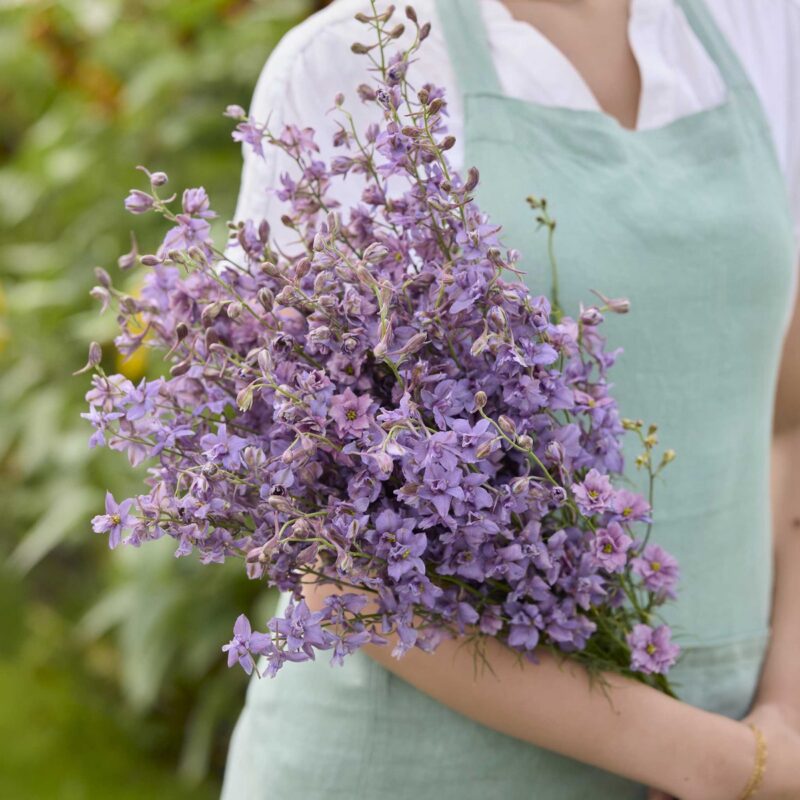
- Larkspur — a hardy annual sown in fall or early spring. Our larkspur ‘Misty Lavender’ guide covers its full cycle.
- Cornflower — the RHS lists it among hardy annuals that can be sown outdoors in autumn.
- Calendula — another RHS autumn-sowing recommendation. Our calendula guide explains its fall timing.
Leave cosmos until late winter if you want to try it, and keep zinnias out of the jug entirely.
Build the jug
The construction is the same everywhere; the details below come from Penn State, Missouri and South Dakota State extension guides, which agree on the essentials.
- Wash the jug in warm soapy water and rinse it. Discard the cap — the open neck is the rain and snow inlet.
- Punch drainage holes in the base with a nail, screwdriver or drill. This is the step people skip, and it is the one that drowns seedlings.
- Cut around the middle, leaving 1.5 inches uncut under the handle as a hinge.
- Add 2 to 4 inches of soilless seed mix. Missouri suggests about 3 inches. Garden soil is a bad idea: it compacts, carries weed seed and can carry pathogens.
- Moisten the mix until damp like a wrung-out sponge, then let excess drain away.
- Sow at packet depth. Fine seed that needs light stays on the surface; larger seed goes at the depth on the packet. Press it gently into contact with the mix.
- Tape the cut edge with light-coloured duct tape. Leave the neck open. Pipe cleaners or twist ties through punched holes are easier to reopen than tape.
- Label inside and out with the variety and the sowing date. A grease pencil or laundry marker survives weather better than a standard permanent marker.
- Put it outside in a spot that gets winter sun and rain, not under a porch roof. Group jugs in a milk crate so wind cannot tip them.
Timing for US and European gardens
A USDA zone number does not translate into a British or German winter, so use local weather rather than a map.
United States. Penn State puts the general window at December to March, depending on local weather. In the northern Plains, South Dakota State recommends February to April for hardy annuals while native perennials go in from December to February. In practice: sow perennials first, then hardy annuals, and stop once nights are no longer reliably cold.
UK, Ireland and mild western Europe. January to March is the practical window. Milder winters mean seed can germinate during a thaw, so later sowing reduces the risk of seedlings sitting wet and leggy through February.
Continental Europe with hard winters. February to March works better than December: a jug sown in December sits frozen and inactive for weeks, while a February sowing still gets weeks of cold without the long freeze.
Illinois Extension warns against starting too early for a different reason: a warm spell can trigger germination, and the seedlings are not hardy enough to survive the cold that follows.
When seedlings appear
Check the jugs as days lengthen. Condensation inside is normal; if the mix looks dry, water gently and close up again.
The moment seedlings are up, ventilation matters more than warmth. Missouri Extension advises opening the jug during the day and closing it before sunset, because the inside can heat up fast even in cold weather and wilt young plants. Once nights are milder, leave the lid off entirely.
Transplant when seedlings are about 2 to 3 inches tall with true leaves, per Missouri Extension. They are already hardened off, so they can go straight out; tease the clump apart and water them in.
Four ways winter sowing fails
- Soggy compost, no seedlings. No drainage holes, or the jug sits in a puddle. Fix the holes and raise it on a crate.
- Seedlings cooked in March. A sealed jug in full sun becomes an oven. Open it by day.
- Mould on the surface. Usually too much moisture and too little air. Vent more, water less.
- Germination in a January thaw. Seedlings emerge, then freeze. Nothing to do but accept the loss; sow a second jug in February as insurance.
FAQ
Can I use a clear plastic bottle instead of a milk jug? Yes. Any translucent container that holds 3 inches of mix and can be vented will work. Opaque containers block the light seedlings need.
Do I need to water over winter? Rarely, if the neck is open and rain reaches the jug. Check in a dry, windy spell.
Can I winter sow tender annuals in April? You can, but you gain nothing; they germinate faster indoors or direct-sown once the soil warms.
Start with one jug
Pick one hardy annual you actually want in the border, build a single jug this week, and label it properly. If it fails, you have lost a jug, some compost and a pinch of seed.
Cornflower is the easiest place to start: Cornflower ‘Tall Pink’ at $3.99 is an heirloom annual listed at 60 to 90 days to maturity. For a taller second jug, Larkspur ‘Misty Lavender’ is also $3.99 and listed as an annual.